How Can Therapy Help With Bereavement..... by Dafina Ganeva


We all at some point in our life experience bereavement. Losing someone very close to us can make us feel the greatest emotional pain ever. Ripped from inside, empty, deeply depressed, sad, angry, desperate, losing all hope, joy and meaning in life and all that and the same time. It can make life extremely difficult for a long period of time. Simple every day tasks may feel impossible to accomplish for a while. And even though all that is very normal it might feel to us at the time as if we are the only ones who have ever been there and as if it will never get better. 

Losing my father when I was 13 years old was one of the most difficult things that ever happened to me. Therapy wasn’t popular back then and there and the adults around me were keener to help with my physical needs but didn’t know what to do with my emotions. So I had to carry that unresolved grief with me for the next 10 years of my life. Unable to speak about my father without bursting into tears or re-living the trauma of his death again and again.

 Getting the support we need during that extremely difficult time in our life can have an enormous effect on our future mental health. It is very important to allow ourselves to grieve and go through the grieving process in our own pace. Therapy can help with that by providing the space for us to do that. Talking about the loss, crying, exploring our feelings of anger or guilt in a safe environment can be life-saving. 

As a bereavement counsellor I have heard so many heartbreaking stories. Losing a baby, a child, a parent, a sibling, a friend, a suppose and sometimes more than one at the same time. All very different stories. All very sad. All unique. And yet people always say to me the same things. ‘No one wants to listen about it anymore.’ ‘I don’t want to upset people with my sadness.’ ‘I need to be strong for the ones who need me.’ ‘Life has no meaning.’ ‘It is so unfair.’ ‘How can I carry on?’ 

And they all do. They carry on. Some of them even stronger than before. As we don’t get over grief and grief doesn’t disappear. We learn how to live with it. It becomes part of who we are and then we grow around it.                       

Dafina Ganeva


Social Media and Indications of Depression in Teens...

Signs of depression in Teens…


The significant characteristic of a major depressive episode is a period of at least two weeks during which there is either depressed or loss of interest or pleasure all activities. For children, expect to see irritability rather than depression other signs of depression to watch for:

  • Loss of interest in normal daily activities

  • Irritable and moody

  • Reduced self-care

  • Substantial weight loss or weight gain

  • Moods of hopelessness

  • Insomnia or sleeps too much

  • Fatigue and loss of energy

  • Expressing feelings of worthlessness

  • Unwarranted guilt

  • Difficulty concentrating

  • Difficulty making choices

  • Complaints of headaches, stomach aches

  • Social isolation

  • Suicidal thoughts, actions, or plans.

 Royal Society for Public Health in the UK surveyed 1500 young people, ages 14 to 24, to define the effects of social media use on problems such as anxiety, depression, self-esteem, and body image. They Instagram, Facebook, Twitter, and SnapChat all had negative effects on mental health


What is integrative therapy? By Miriam Christie

What is integrative therapy? By Miriam Christie


Do a quick google search of ‘what is integrative therapy’, and you get a helpful handful of standard explanations. By way of example, I lifted this particularly handy one from Psychology Today:

“Integrative therapy is a progressive form of psychotherapy that combines different therapeutic tools and approaches to fit the needs of the individual client... By combining elements drawn from different schools of psychological theory and research, integrative therapy becomes a more flexible and inclusive approach to treatment than more traditional, singular forms of psychotherapy.”

Broadly speaking, this is an accurate description of the blended approach usually meant when people use the term ‘integrative’. As an integrative therapist, I find that a knowledge of and an open-mindedness to different ways of understanding ourselves and to working with others allows me to be flexible and intuitive about finding a therapeutic language that has resonance to people.

The truth is, however, that your experience in therapy with an integrative therapist – and arguably therapists of all discipline - will be different, because the missing piece of this integration is you and them. The alchemy of integrative therapy does not lie in the wealth of theories that enrich the practice, it lies in the relationship.

As part of my practice, I integrate object relations - a psychodynamic theory in origin, which is guided by the fundamental belief that our development is profoundly affected by our earliest experiences in relation to caregivers - with humanist theories and practices. Humanistic approaches are characterised by the shared beliefs that people are essentially good and are driven by personal growth and fulfilment.

I see object relations as the vehicle for insight into and understanding of a person’s relational development and, thus, world view. With this understanding, humanistic approaches then create the conditions in which healing, growth and change may occur. Taking a humanist approach to being with another person means that I hold empathy and the therapeutic bond between you and me as the bedrock of any effective healing.  

I bring myself openly and invite you to do the same, in a safe space, free of judgement or expectation. The relationship in therapy can in itself can be reparative, resetting expectations about the self and others. Explored in trust, the dynamic of the ‘me and you’ relationship can help us to see better, accept and/or change deeply entrenched patterns of belief and behaviour, formed in the past and played out in every area of one’s life.

What I like about an integrative approach to therapy is that, in its very nature, it does not seek to say ‘this is the right way’. It acknowledges that we respond to and are healed by different ways of understanding the world and our place within it.

Unfortunately, this does mean that, unlike getting a referral for good a handy-man or reliable cleaner, there is no one size fits all when it comes to therapy. Finding the right therapist for you, regardless of modality, will be specific to you and can be a delicate process. Ultimately, it can boil down to a chemistry between souls.

You can find out more about Miriam on her South London Therapy Group profile page


Can We Talk About Inpatient Groups? By Dr. Katja Hajek, Consulting Clinical Psychologist

The time patients spend on wards can be a passive and lonely experience but it can also be used productively to help people with the one area that dominates all our lives, relating to others.  

Throughout my years working on inpatient psychiatric wards at The Maudsley, Lambeth and St Thomas’ Hospitals in London, there has  been an expectation that staff would run patient groups. Groups are an ideal format for patients to support each other, improve their social functioning and reduce isolation. They also allow input from clinicians to help create a therapeutic environment. Groups on wards are clearly a good idea. 

However, ward staff have very little or no preparation, knowledge nor the confidence. However, they are not prepared to run groups.

To address this basic need, plans are progressing to hosting a one-day workshop on “Inpatient Groups” in February in Sydenham, using the interpersonal model based on Irvin Yaloms’ outstanding work.

As an accompaniment to the book I have co-written, I have produced a DVD, showing a group session with volunteer patients, introducing the workshop attendees to the core principles and skills required of group work in this specific setting.

Group processes and the therapeutic skills that are typically only discussed as theoretical concepts, can be better explained and understood, by watching specific examples from a real group. The workshop will also provide an opportunity to try the newly learnt skills.

To express interest or for more information, please contact me.

Welcoming Jennifer Warwick to SLTG

Jennifer is a children's speech & Language Therapist with extensive experience as a paediatric SLT, working for the NHS and in private practice, now available to see clients at South London Therapy Group (SLTG) in Sydenham 

Jennifer works with children and their families to support and develop communication, interaction and play skills, to help children achieve their potential collaboratively with families and educators…

For more details about Jennifer and her practice:

 www.londoncommunicationclinic.com 

South London Therapy Group (SLTG) are delighted to welcome to Sydenham Letishea McLean

Letishea is a BACP accredited counsellor offering short (6-12) and long-term (12+) counselling.

With clinical experience working in the NHS, University and Judicial settings is building a private practise to help supper clients who need help for feelings of anxiety, depression or relationship issues. 

Letishea’s non judgmental attitude and warm personality and acceptance of of self, leading to helping find self-directed solutions to their issue and concerns.

New Therapy Rooms Terms at (SLTG), Sydenham SE26 4QD

Your favourite room can now be booked as a block for £60 for the day. 

Exclusively for your use for the whole-day for 10 hours for £60 for the day. 

If you prefer these terms to the current hourly room rental, we ask for rent paid monthly in advance and a month's notice at the end.

To proceed, we would need:

  • A copy of your indemnity insurance
  • A photo and bio so that we can list you on our site
  • A £10 deposit when we hand you the keys

If you are already registered with us, just get in touch letting us know if you would like to change to daily rental.  

Community House Keeping:

All the spaces at South London Therapy Group in Sydenham are up and running and because of practitioners’ interest, we are planing to build a separate examination room in another studio space in the same building.

We are also adding a new section to our site listing resources to help colleagues find the kind of professional guidance they need to establish or manage their practice. This may include inviting accountants, lawyers, photographers, web designers, etc. to join our community in an advisory capacity, to give guidance if needed...

We are also growing our therapist listings and to benefit from our referral service, all our member therapists will need to provide a headshot and Bio, to be added to the resource. 


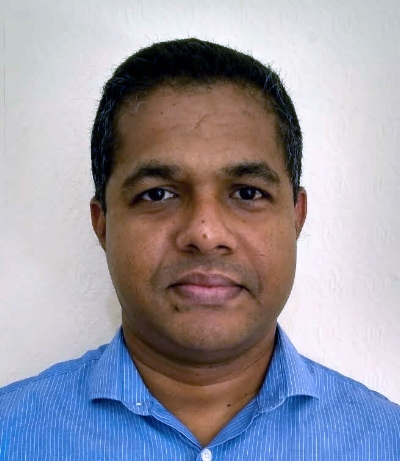
DR. SEBY EMMANUEL B.Sc.,B.A.M.S.

South London Therapy Group would like to welcome Dr. Seby Emmanuel to our group. He is an Ayurvedic practitioner and is now available for appointments in Sydenham.  

South London Therapy Group (SLTG) are delighted to welcome the first Ayurveda practitioner to join the group. Trained in India  Dr. Seby has been practising Ayurvedic Medicine for the last 15 years, for the last 8 years in the UK. DR. SEBY is fluent in English with a working proficiency  in Hindi, Malayalam, Sanskrit, and Tamil…

DR. SEBY EMMANUEL B.Sc.,B.A.M.S. qualified B.Sc in science from India and then went on to earn his Doctorate in Ayurveda. (B.A.M.S.) also from India and is B.R.C.P. registered. If you need more information or would like to arrange an appointment, please contact him directly.

Or contact us and we can make an appointment for you to see him at our one of  our lovely new therapy rooms South London Therapy Group (SLTG) at the heart of Sydenham's  new at the heart Sydenham of regeneration area close to the upgraded Overground and bus connections 

Hacking Happiness…

Available for a year iPlayerBBC RADIO 4

Hacking Happiness - Beyond Happiness - @bbcradio4

The Perfect Life

Hacking Happiness

Are we pursuing happiness, or is the happiness industry pursuing us? 

Leo Johnson goes on a year-long journey to pick up life lessons of happiness from modern day practitioners of radically different philosophies.

It's a journey that takes us from Yorkshire's anti-fracking grannies to the slow footballing Vietnamese monks of Plum Village, from self-cutting poets to the Chief Happiness Officers Convention in Paris, from London's asexual community to multi-orgasmic Swedish academics, and from World Champion Muay Thai women kick-boxers to Elvis-loving dementia sufferers.

What emerges is a set of starkly competing visions of the good life - ancient philosophies still duking it out to get punched in as the destination in our psychic Sat Navs.

What we meet is a set of individuals who have questioned the default comforts of the IKEA catalogue, defined the shape of the self, and chosen lives that give us a glimpse of how each of us can reclaim peace, reclaim purpose, reclaim pain, and reclaim pleasure - the real pleasure that hedonism promised.