
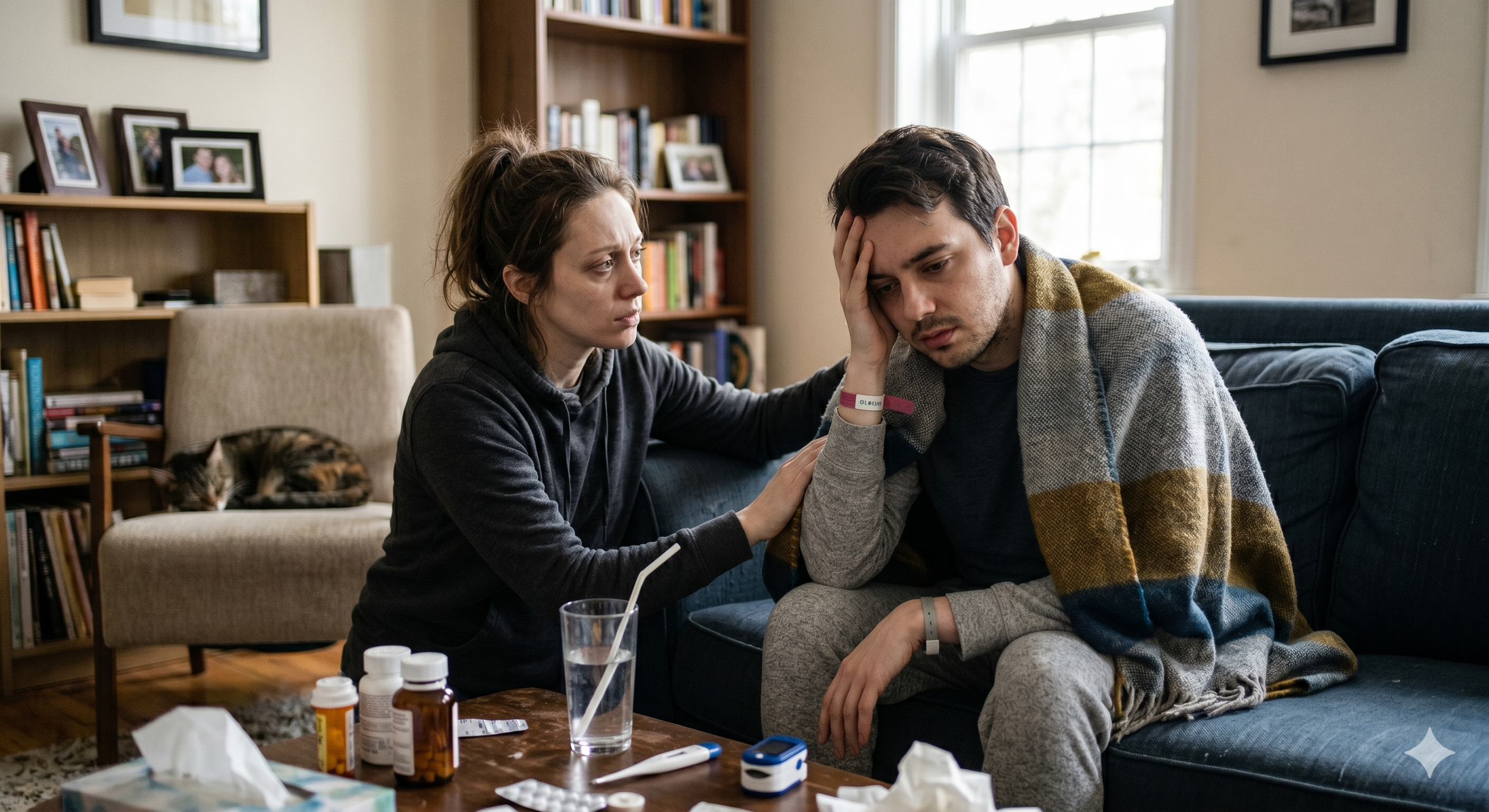
1. Loss of the Former Self
Many men with long Covid experience:
exhaustion
cognitive impairment (“brain fog”)
lowered libido
inability to work or provide as before
emotional withdrawal
shame around dependency
Psychodynamically, this can produce a narcissistic injury — a collapse in the man’s internal sense of competence, potency, autonomy or masculine identity.
The partner may feel:
abandoned emotionally
burdened
guilty for resenting him
frightened by the personality change
isolated because the illness is “invisible”
The couple can begin mourning a relationship that no longer feels the same.
2. The Shift from Partnership to Caretaking
One of the most powerful dynamics to explore is how romantic partnership can unconsciously shift into:
parent/child
nurse/patient
rescuer/dependent
Once this happens:
erotic connection often diminishes
resentment accumulates silently
both partners feel unseen
The healthier partner may suppress anger because the ill partner appears vulnerable.
But psychodynamically, suppressed aggression rarely disappears — it often re-emerges as:
criticism
withdrawal
hopelessness
emotional numbness
3. Masculinity, Shame and Emotional Retreat
This is particularly interesting clinically when the man is ill.
Many men are socialised to derive identity from:
productivity
stoicism
reliability
sexual functioning
problem-solving
Long Covid attacks precisely these capacities.
Rather than expressing grief directly, some men may:
detach emotionally
become irritable
deny vulnerability
retreat into silence
defensively minimise symptoms
Their partners may then experience them as cold, unavailable or no longer psychologically present.
A psychodynamic lens can help readers understand that withdrawal is often organised around shame and fear of collapse, not simply lack of love.
4. The “Invisible Illness” Dynamic
Long Covid creates a peculiar relational problem:
the symptoms fluctuate and are often medically ambiguous.
This uncertainty can unconsciously destabilise the couple.
Partners may begin oscillating between:
compassion
disbelief
frustration
guilt
This can create a cycle where:
the sufferer feels misunderstood
the partner feels emotionally trapped
both feel alone
The blog could discuss how chronic ambiguity itself becomes traumatising for couples.
5. Sexual and Intimacy Changes
A sophisticated but sensitive section could address:
fatigue
lowered libido
touch becoming associated with care rather than desire
fear of burdening the ill partner
loss of spontaneity
Psychodynamically, sexuality in couples often carries meanings around vitality, affirmation, reassurance and attachment.
When illness interrupts sexuality, deeper anxieties can emerge:
“Am I still wanted?”
“Am I now only a carer?”
“Will this ever improve?”
“Can I admit my frustration without seeming cruel?”
6. What Couples Therapy Can Offer
The article should end with hope and clinical containment.
You could explain that couples therapy can help partners:
articulate unspoken grief
recognise defensive patterns
restore emotional communication
separate illness from identity
make room for anger without destroying attachment
renegotiate roles more consciously
A psychodynamic approach is especially valuable because it explores not only practical stressors, but the unconscious meanings illness acquires inside the relationship.