
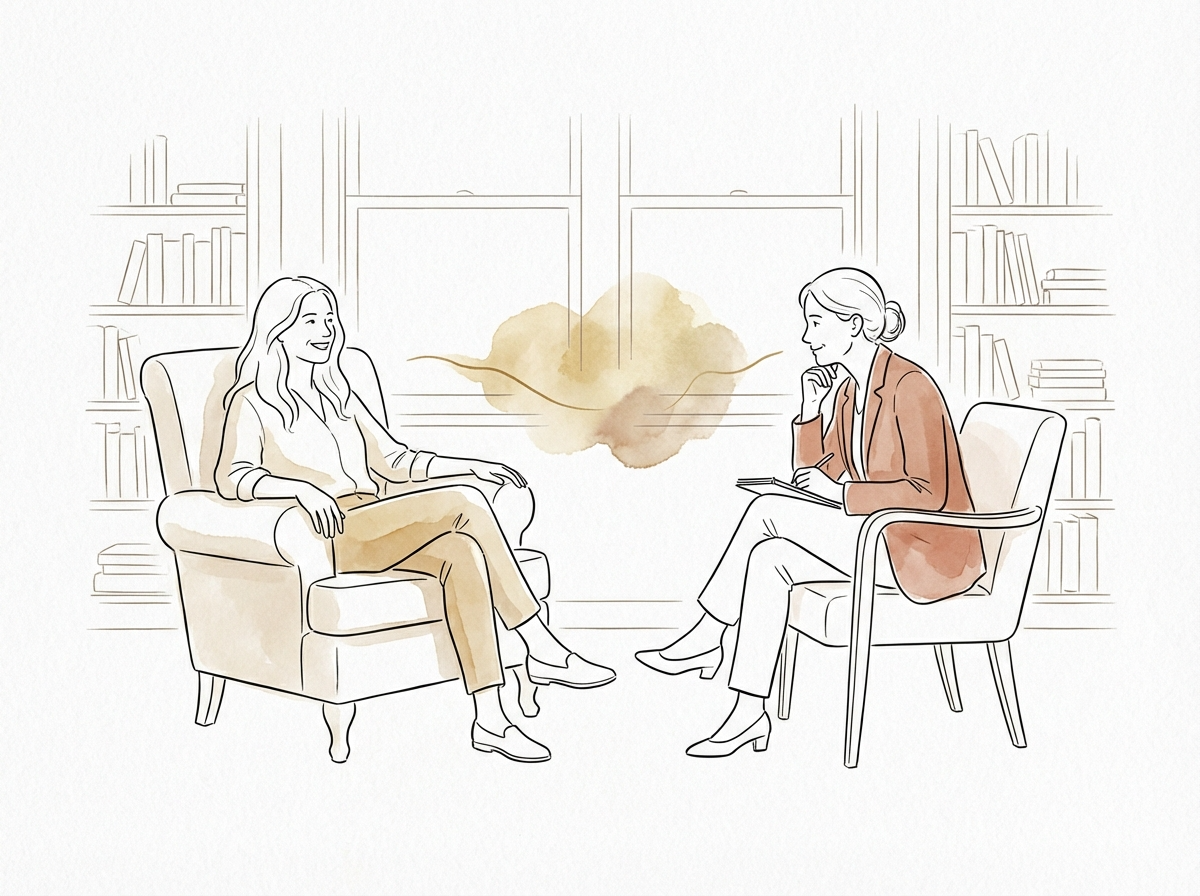
5 Signs It Is Time to See a Therapist
Recognising the signs it is time to see a therapist is not always easy, particularly when you are in the middle of whatever is making life feel hard. Most people who eventually seek counselling describe a period of waiting, of telling themselves things will improve on their own, or of feeling uncertain whether what they are experiencing is serious enough to warrant professional support. The truth is that you do not need to be in crisis to benefit from therapy. If something in your life is causing you persistent distress, affecting your relationships, your work, or your sense of self, that is reason enough to reach out.
This article sets out five of the clearest signs that speaking to a psychotherapist or counsellor could make a genuine difference, and explains what that support might look like in practice.
Why So Many People Wait Too Long
The Culture of Managing Privately
Across the UK, there remains a deeply ingrained tendency to cope quietly. Whether shaped by upbringing, culture, professional identity, or simply the pace of modern life, many people default to managing their difficulties alone for far longer than is good for them. The cost of living pressures that have intensified in recent years have added another layer, with some people questioning whether private therapy is a justifiable expense at a time when every outgoing is scrutinised.
The result is that many people arrive at therapy having already spent months, sometimes years, carrying something that has been quietly eroding their quality of life. Earlier support would have helped, and in most cases the signs were there long before the decision was made.
The Misconception That Therapy Is Only for Crisis
There is a persistent and unhelpful myth that therapy is reserved for people who are seriously unwell or on the edge of breakdown. In reality, counselling in the UK is used by people across the full range of human experience, from those managing acute mental health difficulties to those who simply want to understand themselves better or work through a specific period of change.
The Mind overview of talking therapies makes clear that psychological support is appropriate for a wide range of difficulties, not only diagnosed conditions. Waiting until things become unbearable is not a prerequisite.
When the Signs Are Easy to Dismiss
Part of what makes it difficult to act on the signs it is time to see a therapist is that those signs are often easy to rationalise away. Feeling persistently low can be attributed to the weather, the news, or a difficult period at work. Struggling in relationships can feel like a problem belonging to the other person. Anxiety can be reframed as conscientiousness. The mind is remarkably creative when it comes to finding reasons to delay.
5 Signs It Is Time to See a Therapist
Sign 1: Your Emotions Feel Consistently Out of Proportion or Out of Control
Everyone experiences strong emotions. But if you find that your reactions, whether anger, sadness, fear, or a sense of numbness, feel disproportionate to what is happening, or if they seem impossible to manage once triggered, this is worth paying attention to. Emotional dysregulation of this kind is not a character flaw. It is often rooted in earlier experiences and responds well to therapeutic work.
A qualified psychotherapist can help you understand where these responses come from and develop a more settled relationship with your own emotional life, one that allows you to feel things fully without being overwhelmed by them.
Sign 2: Something Happened That You Have Not Been Able to Process
Bereavement, relationship breakdown, redundancy, a serious illness, a difficult childhood, or any experience that left a significant mark can stay with a person long after the event itself has passed. If you find yourself returning repeatedly to something that happened, if it intrudes into your sleep, your concentration, or your relationships, this is a sign that the experience has not been fully processed.
Trauma, whether large-scale or the quieter kind that accumulates over time, does not resolve simply by waiting. Counselling offers a structured, safe space in which that processing can genuinely happen.
Sign 3: Your Relationships Are Suffering
Difficulties in relationships, whether with a partner, family members, friends, or colleagues, are one of the most common reasons people seek therapy in the UK. If you notice recurring patterns of conflict, withdrawal, difficulty trusting others, or a persistent sense of disconnection from the people around you, these patterns often have roots that predate the current relationships themselves.
A psychotherapist can help you examine those patterns with honesty and without judgement, and support you in making changes that improve not just one relationship but the way you relate to others more broadly. If the difficulties are primarily within a partnership, practitioners who specialise in couples therapy are listed on The Therapist Finder, with profiles detailing their approach, availability, and fees.
Sign 4: You Are Using Coping Strategies That Are Starting to Cause Their Own Problems
Alcohol, overworking, social withdrawal, compulsive behaviours, excessive screen time, or disrupted eating can all function as ways of managing emotional pain that has not been addressed at its source. If you notice that you are relying increasingly on one or more of these strategies, and particularly if they are beginning to affect your health, your relationships, or your ability to function, this is a significant sign that something underneath needs attention.
Addressing the coping behaviour alone, without understanding what it is protecting you from, rarely produces lasting change. Therapy works at the level of the underlying difficulty, which is where durable change becomes possible.
Sign 5: You Have a Persistent Sense That Something Is Not Right
Not every reason to seek therapy can be easily named. Sometimes the sign is simply a low-grade but persistent feeling that life is not working, that you are not living in a way that feels true to you, or that something important is being avoided without your being able to say precisely what it is. This kind of diffuse dissatisfaction is just as valid a reason to seek support as a specific event or diagnosis.
The NHS guidance on types of talking therapy offers a useful introduction to the different approaches available and what each one addresses, which can help you begin to identify what kind of support might suit you best.
What a Qualified Therapist Offers Beyond Acknowledgement
Friends, family, and online communities can offer comfort and a sense of being heard. These things have real value. But a qualified psychotherapist or counsellor offers something distinct: a trained, consistent, professionally supervised relationship in which you can explore your difficulties without concern for the other person's feelings, without fear of judgement, and without the usual social constraints that shape most conversations.
Private therapy in the UK also offers continuity. The same person, week after week, building a genuine understanding of your history, your patterns, and your particular way of making sense of the world. Over time, this consistency itself becomes part of what makes the work effective.
Counselling does not simply help you feel better in the moment. It supports lasting change at the level of how you understand yourself, how you respond to difficulty, and how you relate to the people around you. For many people, recognising the signs it is time to see a therapist, and acting on them, marks the point at which something genuinely begins to shift.
Frequently Asked Questions About Signs It Is Time to See a Therapist
Do I need a diagnosis to see a therapist in the UK?
No. You do not need a formal diagnosis or a GP referral to access private therapy in the UK. Many people who seek counselling do not have a diagnosed condition: they are dealing with life difficulties, relationship challenges, or a general sense that they want to understand themselves better. A qualified therapist will work with whatever you bring.
How do I know if what I am feeling is serious enough for therapy?
If something is consistently affecting your quality of life, your relationships, or your ability to function, it is serious enough. Therapy is not reserved for extreme circumstances. Many people find that earlier support, before things reach a crisis point, produces better and faster results than waiting until they feel they have no other option.
Can therapy help even if I cannot identify a specific problem?
Yes. A diffuse sense that something is not right, without a clear or nameable cause, is a very common reason people begin therapy. A skilled psychotherapist will help you explore what lies beneath that feeling over time, without requiring you to arrive with a neat diagnosis or a fully formed account of what is wrong.
Taking the Signs Seriously
If you have recognised yourself in any of the signs described in this article, that recognition matters. It is not self-indulgence or overreaction. It is honesty about your own experience, and honesty is where useful change begins.
The Therapist Finder directory brings together verified, qualified psychotherapists and counsellors from across the UK. Every profile includes the practitioner's specialisms, their fees, and their current availability, so you can make an informed decision about who to approach and when. If you are ready to take the next step, you can browse therapist profiles and find the right person for you at a pace that feels right.