
What to Expect During Your First Therapy Session
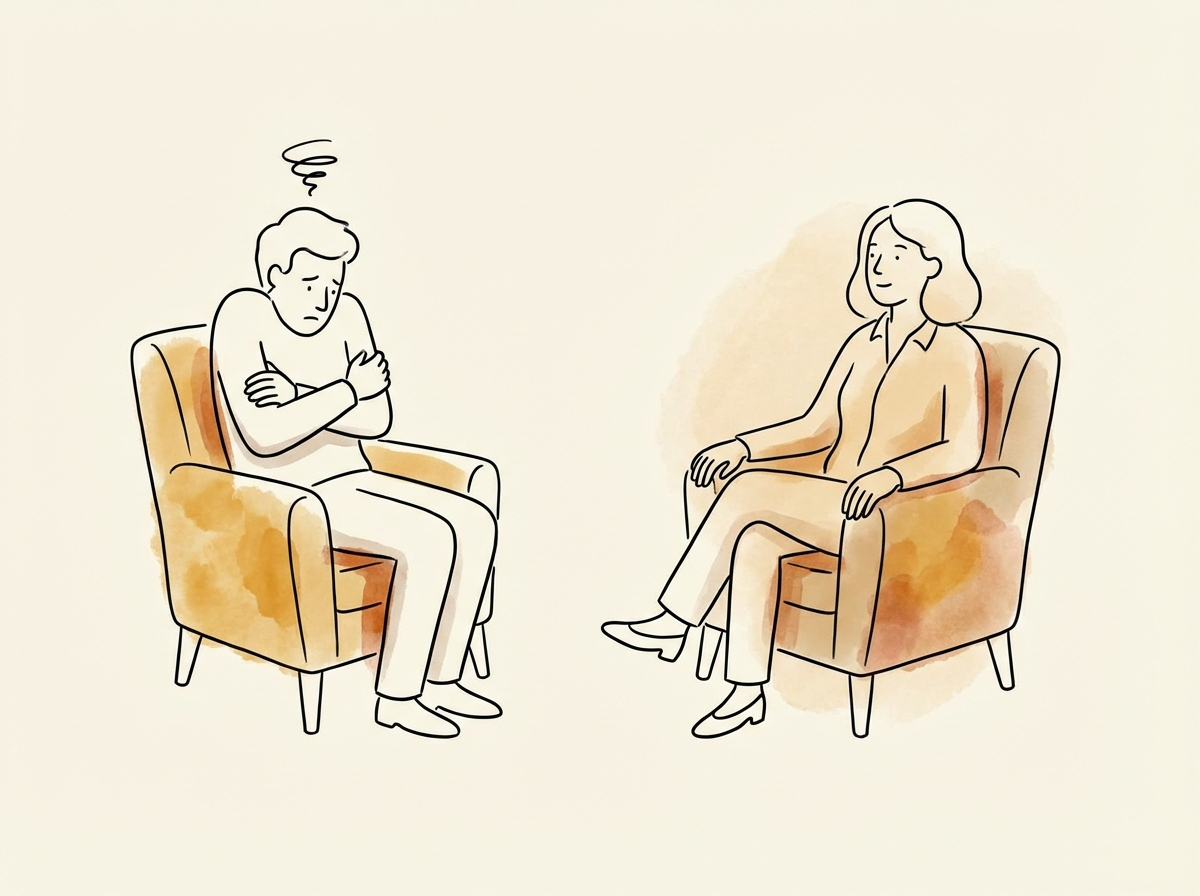
Your first therapy session is not a test, and there is no right or wrong way to show up for it. For many people across the UK, the anticipation of that initial appointment brings up as much anxiety as the difficulties that prompted them to seek help in the first place. During your first therapy session, your psychotherapist or counsellor will typically spend the time getting to know you, understanding what has brought you to therapy, and beginning to establish a sense of how they might be able to help. Nothing will be forced, and you will not be expected to share more than you are ready to.
This article explains what you can realistically expect, how to prepare, and why that first conversation matters more than many people realise.
Why the First Therapy Session Feels So Daunting
The Vulnerability of Walking Through the Door
There is something particularly exposing about sitting down with a stranger and beginning to talk about the parts of your life that feel most difficult. Even people who have thought carefully about seeking therapy often describe a wave of doubt in the days or hours before their first appointment. That doubt is not a sign that therapy is wrong for you. It is a very human response to doing something unfamiliar that requires trust.
In the UK, many people also carry an inherited reluctance to ask for help, a cultural tendency to manage privately and present well to the outside world. Counselling challenges that tendency directly, and the discomfort of that can surface even before the session has begun.
The Gap Between Expectation and Reality
Much of the anxiety around a first therapy session comes from not knowing what will actually happen. Popular culture has given most of us a distorted picture: a couch, an inscrutable therapist taking notes, long silences, and interpretations delivered with clinical authority. The reality of modern psychotherapy and counselling in the UK is considerably warmer and more collaborative than that image suggests.
Understanding what is genuinely likely to happen can reduce the apprehension significantly, and that is precisely what this article is here to do.
When Anxiety About Therapy Is Itself a Barrier
For some people, the anxiety about the first session is significant enough to cause repeated postponement. Appointments are booked and cancelled. The search for a therapist stalls. Weeks pass. This is more common than most people acknowledge, and it is worth naming directly: the nervousness you feel about beginning is understandable, and a good therapist will expect it.
The Mind guidance on starting therapy is a helpful resource if you are at the point of considering your options but have not yet taken the first step.
What Actually Happens in Your First Therapy Session
The Opening: Introductions and Practicalities
Your therapist will usually begin by covering a small number of practical matters: how long sessions will last, what happens if you need to cancel, how confidentiality works, and what their approach involves. This is not bureaucratic formality. It is the foundation of a clear and trustworthy working relationship, and it gives you an early opportunity to ask questions.
Most sessions last fifty minutes to an hour. Some therapists work from consulting rooms within dedicated therapy centres, such as those available through the South London Therapy Group, while others offer online sessions or see clients from their own private practice.
The Assessment: Understanding What Has Brought You Here
The heart of the first therapy session is a gentle, open-ended conversation about you. Your counsellor or psychotherapist will ask questions to understand what has brought you to therapy at this particular point in your life. They are not conducting an interrogation. They are listening, beginning to form a picture, and creating the conditions in which you can feel safe enough to speak honestly.
You do not need to have a polished account ready. Many people find it difficult to articulate exactly what is wrong, and that is entirely fine. Saying "I am not sure where to begin" is a perfectly valid opening, and a skilled therapist will help you find your way into the conversation.
What You Will and Will Not Be Asked to Do
You will not be asked to relive traumatic events in detail during a first session. A responsible practitioner registered with the British Association for Counselling and Psychotherapy understands the importance of building trust before depth. The first session is rarely the place for the most difficult material: it is the place where the relationship begins.
You may be asked about your history, your relationships, your current circumstances, and what you are hoping therapy might offer you. Some therapists use a more structured initial assessment; others work more conversationally. Either way, you remain in control of what you share.
The End of the Session: What Happens Next
Towards the end of your first therapy session, your therapist will typically summarise their initial understanding of what you have shared and discuss how they might be able to work with you going forward. They may suggest a particular approach or explain why their way of working seems suited to your situation.
You will usually be invited to book a follow-up session, but you are under no obligation to do so immediately. It is entirely reasonable to take a day or two to reflect on how the conversation felt before committing to ongoing work. The Therapist Finder encourages clients to treat the initial consultation as a two-way process: you are assessing the therapist as much as they are beginning to understand you.
How to Prepare Practically
There is no elaborate preparation required for a first therapy session. Arriving with a rough sense of what has prompted you to seek help at this time is genuinely useful, even if that amounts to a few words rather than a detailed account. Some people find it helpful to write a few notes beforehand, not to read from, but simply to organise their thoughts.
Give yourself time around the appointment if you can. Rushing in from a stressful commute or rushing straight back to a demanding work meeting either side of a therapy session does not serve the work well. Even ten minutes of quiet before or after makes a difference.
Why Professional Support Goes Beyond Talking It Through
It is possible to find good information about therapy, to read about different approaches, and to arrive at your first session feeling relatively informed. But the value of working with a qualified psychotherapist or counsellor lies in something that information alone cannot provide.
A trained professional brings the ability to hear not just what you say but how you say it, what you avoid, and what patterns emerge over time. Counselling in the UK is regulated by professional bodies precisely because this work requires genuine expertise, ethical accountability, and clinical supervision. The relationship that develops between a client and their therapist over weeks and months is itself a therapeutic instrument, and that process begins, quietly, in the very first session.
Private therapy also offers consistency that can be difficult to find through other routes. The same person, the same space, the same unhurried hour: these conditions matter more than they might initially appear to.
Frequently Asked Questions About Your First Therapy Session
Do I have to talk about my childhood in the first session?
No. A responsible therapist will not push you into territory you are not ready for, particularly in an initial session. Some approaches do explore early experiences over time, but this happens gradually and only when a foundation of trust has been established. You are always in control of the pace.
What if I cry or become upset during the session?
This is entirely normal and nothing to be concerned about. Therapists are trained to hold space for strong emotion without alarm or discomfort. Becoming upset during a first therapy session is often a sign that you are beginning to allow yourself to be honest, which is precisely what therapy requires.
How will I know if the therapist is right for me after just one session?
You may not know with certainty after a single conversation, and that is fine. Pay attention to whether you felt heard, whether the therapist seemed genuinely engaged, and whether the space felt safe enough to return to. A moderate sense of discomfort is normal; a feeling that you were dismissed or misunderstood is worth taking seriously.
Ready to Take the First Step
Your first therapy session is the beginning of something that has the potential to change the way you understand yourself and the difficulties you are carrying. It does not need to be perfect, and neither do you. What matters is that you show up, as honestly as you can, and give the process a chance to begin.
If you are ready to find a qualified psychotherapist or counsellor whose approach, specialism, and availability fit your needs, you can browse verified therapist profiles on The Therapist Finder, where every listing includes details of fees, specialisms, and current availability. The right person is there. Finding them is the first step.